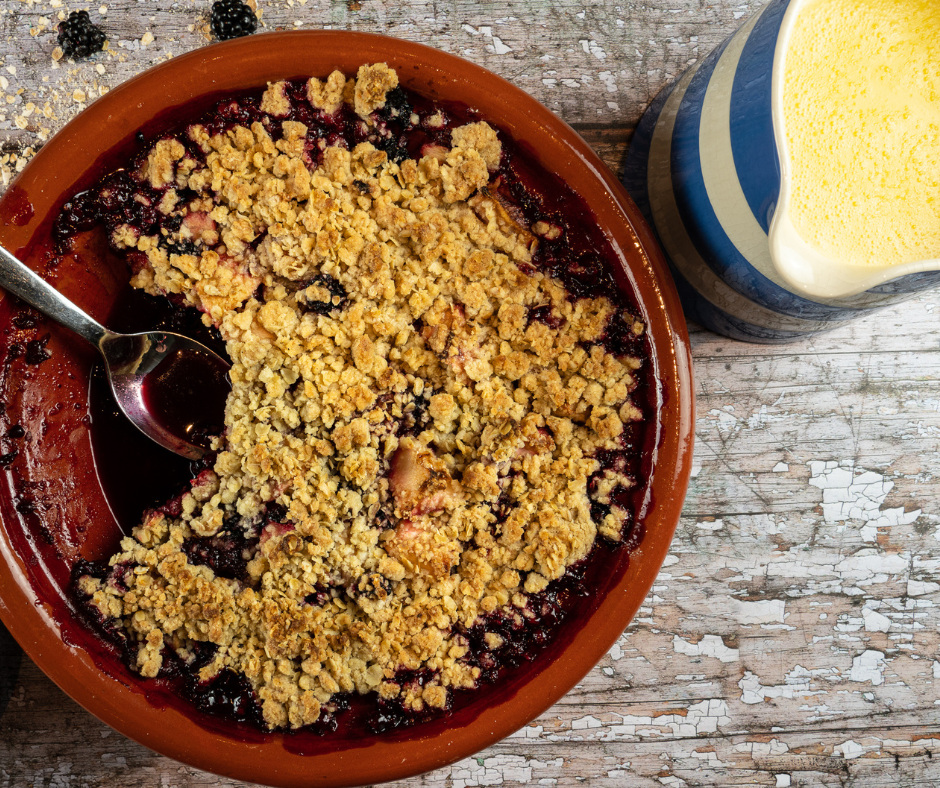
As summer turns into autumn, Scotland’s countryside becomes a treasure trove of wild blackberries. Foraging for these juicy berries is a wonderful way to connect with nature and enjoy some delicious seasonal treats.
In this blog, we share tips on where to find blackberries, how to pick them, how to know when they’re ripe, and how to prepare them for all kinds of tasty recipes.
Where to find blackberries in Scotland
Blackberries, also known as brambles, are plentiful throughout Scotland. You’ll find them in hedgerows, at the edges of woods, and in urban parks and open fields. Keep an eye out for them when you’re out walking.
Blackberries or brambles – what’s the difference?
People often use the terms ‘blackberries’ and ‘brambles’ interchangeably. But what exactly is the difference between the two?
‘Blackberries’ refers to the small, juicy berries themselves. These berries can be sweet or slightly tart depending on their ripeness and variety.
‘Brambles’ on the other hand, refers to the entire plant. This thorny shrub belongs to the Rubus family and includes not just blackberries, but also raspberries and dewberries. In Scotland, ‘bramble’ is commonly used to mean both the plant and the fruit, so if someone says they’re picking brambles, they’re probably foraging for blackberries.
Top tips for foraging
Blackberries ripen from late August to early October, though this can vary with the weather and location.
To protect yourself from scratches, wear long sleeves and trousers, as blackberry bushes are armed with thorns and stinging nettles.
Use a shallow basket or flat container to avoid squishing the berries at the bottom. If you’re planning to be out foraging for a long time, bring a cooler with ice packs to keep your berries fresh.
The best times to pick blackberries are early morning or late afternoon, when the berries are cooler and firmer.
Avoid picking after rain, as wet berries can become waterlogged and spoil faster.
When you approach a bramble bush, reach for the berries at the top, which are often the sweetest. Ripe blackberries should be firm, plump, and deep black or dark purple. They should come off the stem easily with a gentle pull. If a berry is soft or falls off too easily, it’s probably overripe.
To check whether a blackberry is ripe, gently press it between your fingers. If it’s firm but gives slightly, it’s ready to eat.
Conversely, if the berry is soft and falls off at the slightest touch, it may be overripe. Overripe berries, while still edible, tend to spoil quickly and are better left on the bush to provide food for birds and other wildlife.
The flavor of a blackberry at its peak is a perfect balance of sweetness and tartness. The taste should be rich and full-bodied, with a slight juiciness that bursts in your mouth.
Preparing your foraged blackberries
Even though your blackberries come from the wild, they might still have dirt or insects on them.
Give them a gentle rinse under cold water using a colander. Avoid soaking them, as blackberries can easily absorb water, which can make them mushy and dilute their flavor.
Once rinsed, let them air dry on a paper towel or clean cloth.
Store your blackberries in a single layer in the fridge, ideally on a paper towel-lined tray to absorb moisture.
If you’re not using them right away, freeze them in a single layer, then transfer to a container or sealed bag once frozen.
A versatile fruit
Blackberries are incredibly versatile. Enjoy them fresh, add them to salads, blend them into smoothies, or use them in cakes and desserts.
One of the best ways to enjoy them is with oats. The combination of juicy blackberries and hearty oats creates a satisfying balance of flavours and textures, perfect for everything from breakfast to bars and snacks to delicious desserts, including this classic blackberry and apple crumble.