


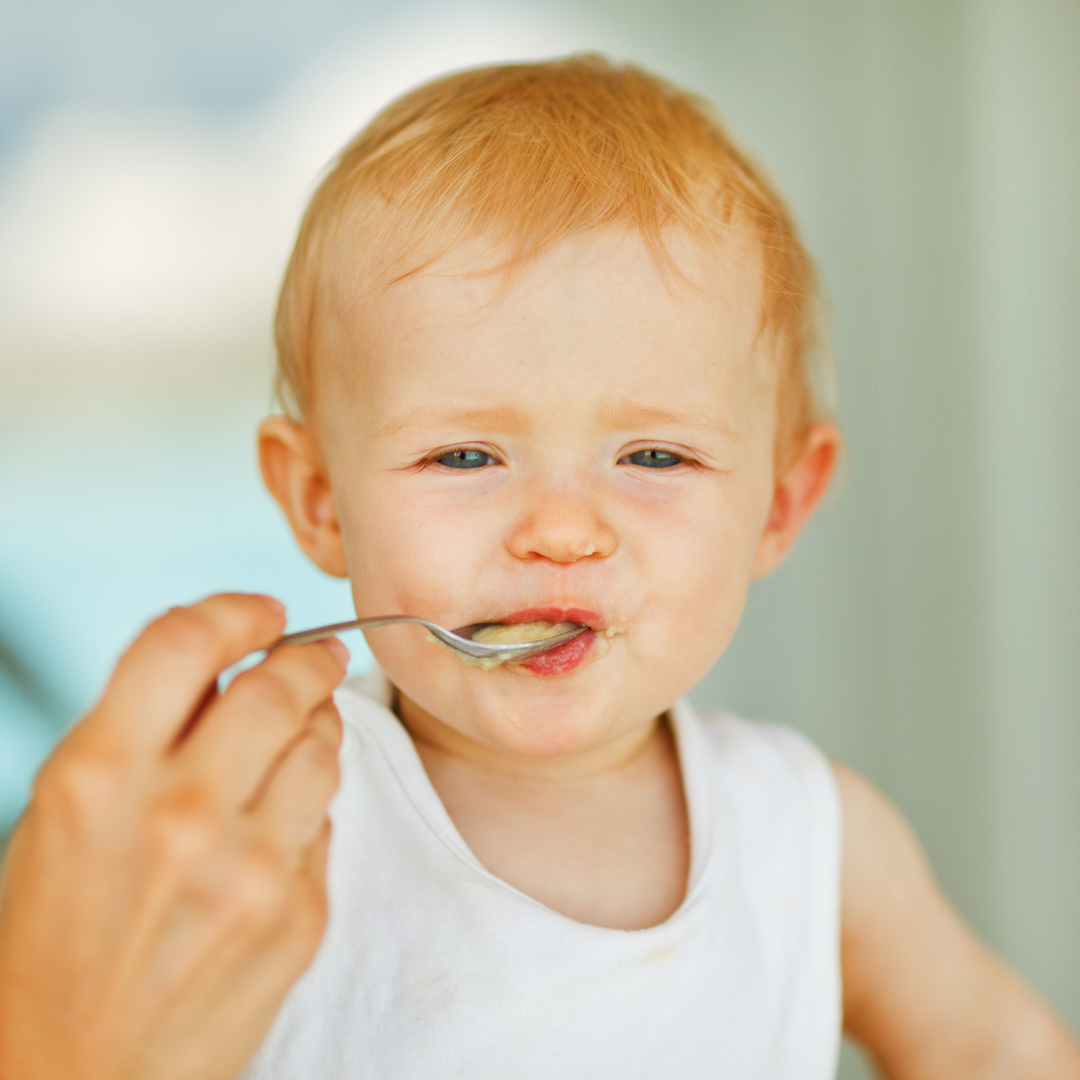
From Porridge to Pancakes: Using Oats in Baby’s First Meals
by Suzanne Fletcher, Registered Public Health Nutritionist and Founder of Nutrition Scotland
Introducing solid foods is an exciting stage in your baby’s development. As public health nutritionists working across diverse communities, we support healthy affordable approaches that encourage shared family meals and a positive start to eating well.
When and how to Start
The NHS recommends introducing solid foods at around six months of age, alongside breast milk or infant formula. Most babies are ready when they can sit upright with support, pick up food and bring it to their mouth and swallow rather than push it back out.
At this stage, it is not about how much they eat, but about offering new experiences. Foods should be soft enough to squash between your fingers and cut into a size and shape that is safe to reduce the risk of choking.
Why oats are a great first food
Oats are a whole food, minimally processed and naturally rich in fibre, B vitamins, iron and magnesium. They are gentle on digestion, mild in flavour and easy to prepare in a variety of ways depending on your baby’s stage of development.
Porridge is especially versatile and can be adapted as your baby grows, starting smooth then gradually increasing in texture.
Oats can be mixed with vegetables or fruit, stirred into a range of meals or used to prepare soft finger foods as your baby becomes more confident.
They’re also affordable, easy to store and flexible enough to be used in breakfasts, snacks or main meals.
Why homemade matters
Research from the University of Glasgow, led by Dr Ada Garcia, has shown that many commercial baby foods in the UK are higher in sugar than many parents expect, even in products labelled as savoury. Added fruit purees or concentrates often boost the sugar content, which may influence a baby’s preference for sweeter foods later on.
Further research also found that baby foods, especially those marketed for baby-led feeding, often include claims like “perfect for tiny hands” or “supports development.” These marketing messages can make it seem like packaged foods are necessary, when in fact simple homemade meals made from whole foods are more nutritious and equally supportive of learning and development.
By preparing foods at home using ingredients like oats and fresh fruit, you can offer a wider range of flavours and textures, avoid unnecessary sugars and additives, and support your baby’s developing skills in a relaxed and familiar environment.
Including oats when introducing solid foods
To begin with, oats can be served as a smooth porridge made with breast milk, formula or water. You can mash in banana or soft cooked pear to add flavour and nutrients.
As your baby grows more confident, oats can be used in overnight oat recipes, stirred into vegetable purees or soups, baked into oaty yoghurt pancakes or added to an oat omelette with soft cooked vegetables.
Oats can also be stirred into savoury family dishes, like spaghetti bolognese, to help bulk out the sauce and add extra fibre, it’s a great way to share meals and reduce waste.
Whatever the dish, make sure food is offered in the right texture and size for your baby’s age and stage, to support safe exploration and learning.
Sharing family foods
From six months, babies can enjoy many of the same foods as the rest of the family. The key is offering foods without added salt or sugar, preparing meals to suit your baby’s ability to chew, and ensuring food is safe to handle and swallow.
Making mealtimes fun and relaxed helps babies enjoy new experiences with food and reduces pressure at the table. Allowing babies to explore, touch and try foods at their own pace builds positive associations with eating and supports healthy habits that can last a lifetime.
Sharing meals helps babies feel part of family life, encourages a wide range of eating experiences and supports the development of important social and mealtime skills.
Final thoughts
Introducing solid foods is an opportunity to keep things simple, affordable and enjoyable. Whole foods like oats provide a nutritious, flexible and easy start to family meals.
With a little preparation, you can offer real food experiences that support your baby’s growth, development and love of food right from the beginning.
For more ideas and support with introducing solids and family nutrition, visit www.nutritionscotland.org
References
- NHS. (n.d.). Your baby’s first solid foods. https://www.nhs.uk/baby/weaning-and-feeding/babys-first-solid-foods/
- Garcia A. L. et al. (2013). Nutritional content of infant commercially available weaning foods in the UK. Archives of Disease in Childhood.
- Menon R., Garcia A. and Parrett A. (2020). Extensive and unregulated use of on-pack promotional claims in commercially available baby foods in the UK. University of Glasgow. https://www.gla.ac.uk/news/archiveofnews/2022/march/headline_836618_en.html
About Suzanne Fletcher

Suzanne is a Registered Public Health Nutritionist and founder of Nutrition Scotland. She holds an MSc in Human Nutrition from the University of Glasgow and is a regional representative for the Association for Nutrition.
Her expertise spans public health, nutrition research and health improvement in both the NHS and third sector. Since founding Nutrition Scotland, she has led the development and delivery of evidence-based programmes to support healthier communities.
Suzanne has been recognised nationally for her contributions to public health nutrition by The Caroline Walker Trust and the University of Glasgow. She continues to champion accessible, high-quality nutrition services and the use of nutritious, locally produced Scottish food.