


by Food Historian, Peter Gilchrist

Samuel Jonson, the English 18th century writer, once said “If an epicure could remove by a wish, in quest of sensual gratifications, wherever he had supped he would breakfast in Scotland.”
While slightly lost in his poetry, his point remains; for centuries, Scottish breakfasts have been famed around the world
This is in no small part thanks to the humble Scottish Oat.
In the 21st century, oats seem to be having a renaissance. From savoury porridges and overnight oats to whole grain feasting and anti-oxidant chasers; oats are the grain of the moment, but why exactly are oats from Scotland the best in the world?
Grains in prehistoric Scotland
Scotland’s cold, dark and rainy growing season has always been a challenge, but especially for our wheat-loving ancestors.
The jagged rocks of the highlands and unforgiving winds are no friend to the gentle stocks. Likewise, the wet climate and boggy soil of the lowlands will rot the fragile wheat grains in the ground.
New archeological findings paint a picture of how Scotland’s stone age people may have fed themselves; with hardy grains like barley and rye to thicken stews and soup, as well as unleavened breads.
While stray wild oats may have been dropped on Scottish soil by birds and merchants, we attribute the introduction of cultivating oats to the Romans.
Oats had been cultivated in the Middle East and Europe two thousand years before they arrived in Scotland, and when the Romans brought them around the first century, they were in fact being grown as horse feed.
However, Scotland’s people had already spent the last millennium cooking with grains, slowly adopting cereal dishes as part of their daily lives.
What’s more, when the first oats were harvested in Scotland, they weren’t like anything they had eaten before. The same water that created whisky and rolling pastures for our globally renowned cattle, had fortified every kernel with taste and complexity. What once were bland parched grains became a nutty and nutritious staple, when grown in Scotland.
Even groups like the Picts are now believed to have adopted oats, alongside barley, as a major food group that transcended all social classes. Everyone was eating oats; young to old, peasant to monarch.
The Romans couldn’t conquer Scotland, but oatmeal would be the victor.
Medieval oats
As oats would rise as a prominent crop for Scotland, so too would their incorporation into the mystical aspect of the lives of Scotland’s ancient people.
Bannocks, an unleavened oat bread, would become a staple at most mealtimes, with special sacred recipes cooked on the Quarter Days of the year.
The Beltane Bannock was cooked on the morning of Beltane, now observed on May 1st, and consisted of a wide oaty disc with small mounds of oatmeal around the perimeter, somewhat like that of a clock face. A farmer would take the bannock into his field and remove the mounds, tossing them into the wind as an offering to the beasts, diseases, storms and gods, in the hopes of keeping his crops and livestock in good favour.
Through its availability and versatility, oats were beginning to transcend from a valuable commodity to sacraments of folklore.
The prevalence of oats only grew through the medieval period, but for a darker reason than you might think.
The Black Death arrived at Scotland in 1349, decimating the population and in particular; the cattle farmers. Scotland has always been a prolific cattle farming country, but after a generation of farmers were wiped out, the country had to turn to oats to provide the sustenance it would need to survive The Pest.
Oats in the modern period
Towards the end of the sixteenth century, Fynes Morrison produced the first real outline of the Scot’s diet.
While there was consistently root vegetables, eggs, poultry and a small amount of “flesh”, the name given to meat, it was porridge and ‘gruel’ that loomed largest in the daily menus.
Kailyards, small kitchen gardens that were often attached to cottages, provided Scots with room to grow new crops like potatoes, Swedish turnips (swedes) and, of course, kail. While they were a welcome addition to a very sparse diet, oats would remain the foundation of Scottish cookery.
By the time we get to the 18th century, oats made up the majority of the average household expenses, and nearly half of all crops being harvested in Scotland.
Oatmeal is cited as the number one expense, from croft house to tenement. More than rent, meat, clothing or beer.
The prevalence of porridge can be further illustrated by the emergence of the porridge drawer; a special lined drawer in kitchen dressers that would receive a weekly ration of cooked porridge. Once cooled, the porridge would be cut into slices and fried for breakfast or wrapped and taken for lunch.
However, the 19th century saw the food system in Scotland turned on its head, as rural communities headed to cities, as a result of clearances or simply in search for work.
Tenement living left no room for kailyards and so Scotland became reliant on its bakers and grocers to provide daily produce.
With new Victorian attitudes to the “clean” appearance of food and culinary “purity,” white bread became increasingly popular, relegating the once ubiquitous bannock to rural Scotland.
As pies and sausages from the flourishing Victorian butchers would begin to replace evening porridge and barley soups, oats became increasingly associated with breakfast and grocers continued to supply the expanding towns and cities.
The 20th century would bring two world wars, which brought rationing and food shortages.
Scottish households, however, had breakfast covered. Porridge oats were now seen as an important staple and therefore, exempt from rationing across Britain.
While mass produced porridge from around the world would have been a challenge, the Scots faired far better, sustained by oats of our own harvest. Scottish oats, grown in a climate that harvests a supreme grain, cooked in Scottish water and seasoned to perfection. Served with Scottish milk, from cows with ample pasture, with thanks again to the enduring Scottish rain.
It is not culinary creativity that makes our oats great. It is our very country that makes them the best in the world.
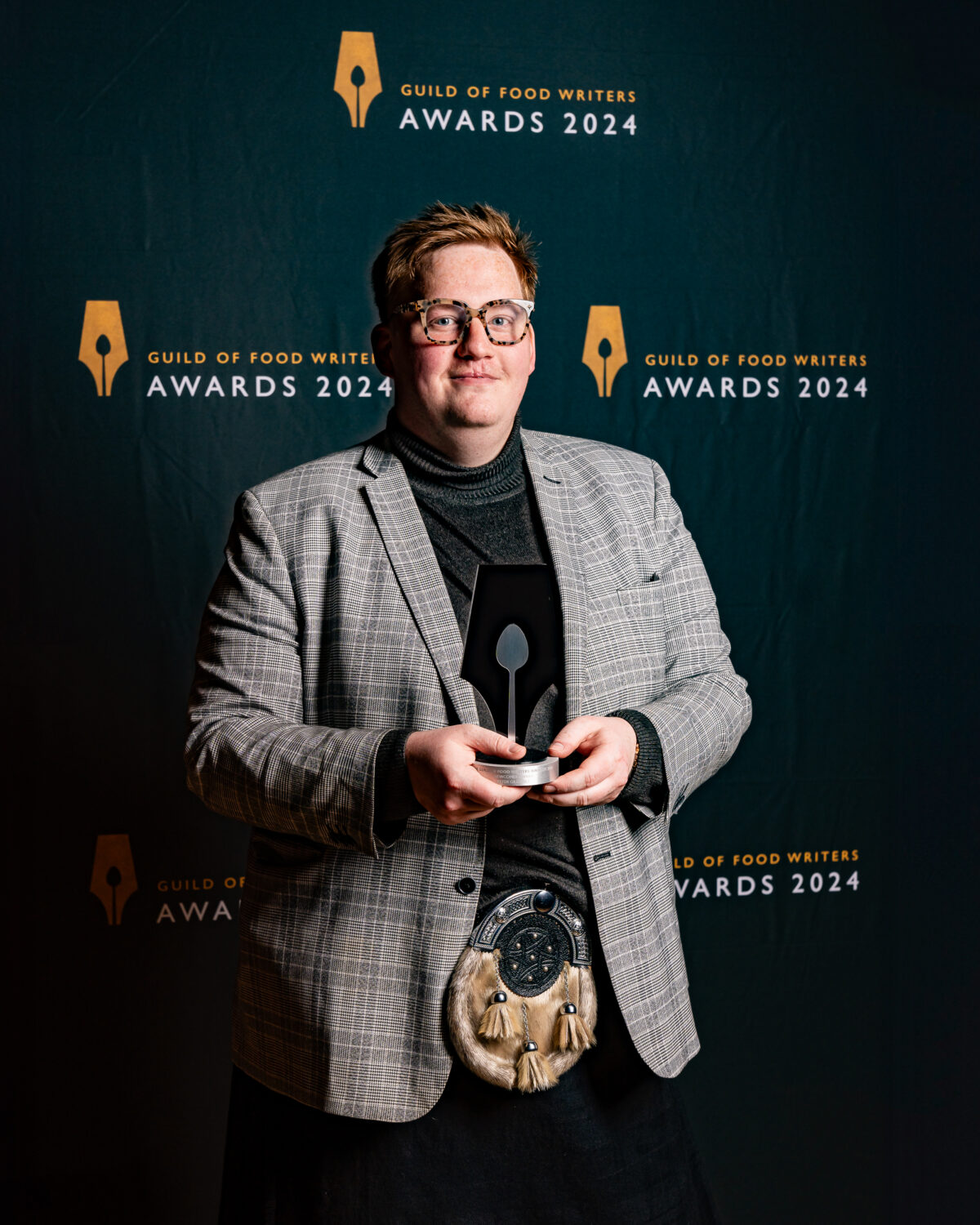 Peter Gilchrist is a leading expert in Scotland’s food heritage.
Co-Director of the Glasgow University Food and Drink History Lab, and founder of Tenement Kitchen, Peter was the Guild of Food Writers’ Best Newcomer in 2024.
He co-hosts and produces the Scottish Food History Podcast with Dr Lindsay Middleton, as well as running the Scottish Food Heritage Symposium.