


The inaugural World Bannock Day, a new event to celebrate the traditional bannock and a Scottish food and cultural icon, Florence Marian McNeill, takes place on Wednesday 26 March.
Remembering Florence Marian McNeill
Born in Orkney in 1885, pioneering Scottish writer, journalist, and activist, Florence Marian McNeill, spent her life documenting Scotland’s food culture, history, and traditions.
Best known for her 1929 book The Scots Kitchen, she preserved and championed the nation’s food heritage, detailing traditional recipes and regional specialities, including the humble bannock.
But Florence’s impact extended far beyond the kitchen. She was also a researcher for the The Scottish National Dictionary, a women’s rights campaigner, and a co-founder of the SNP.
Now a team of historians, artists, producers and journalists have teamed together celebrate the humble bannock and raise awareness of McNeill’s contributions to Scottish culture.
Together, they have developed a new annual event, World Bannock Day, the first of which takes place on 26 March, Florence’s birthday.
The Bannock: A Scottish Food Icon
The bannock, a simple traditional Scottish flatbread, made with oatmeal, flour and milk was once a staple in nearly every Scottish household. Every region had its own variation, and special bannocks were baked for different occasions, from Hogmanay to seasonal festivals.
Despite its rich history, the bannock has faded from everyday life, and World Bannock Day is here to bring it back!
Peter Gilchrist, food historian and blogger at the Tenement Kitchen, who is one of the event’s organisers, sums it up best.
“Bannocks are the perfect food to celebrate Florence with. There are dozens of recipes that span from crispy oat cakes to fruited soda breads and until relatively recently, bannocks were served at nearly every meal. Every family had a recipe. There were special bannocks made for yule, hogmanay, and for the changing of the seasons. Every region had their own special recipes or bannock rituals. It was something that used to unite us and now they’re almost extinct.”
“Making a bannock is an act as Scottish as a dashing white sergeant, drinking Irn Bru or standing in line for a free prescription.
“I think Florence would have loved that we are using World Bannock Day to celebrate her, although I suspect she’d hate the attention.”
“Florence wrote extensively about bannocks in her career. She detailed the regional variations and catalogued ancient bannock rituals. Without Florence’s writing, we’d not know nearly as much as we do about our own food history, let alone bannocks.”
“I think the era of the charcuterie board is over. The era of the bannock platter has come! Serve them with cheese, butter, smoked fish and dried meats. Have them with eggs and bacon for breakfast or serve with your lunch broth. They’re so versatile; it’s time for Scotland to bring them back.”
“A great oatmeal makes a great Bannock, so World Bannock Day is delighted to welcome sponsorship from Hamlyns of Scotland.”
Hamlyns of Scotland
The best bannocks start with great oatmeal, and at Hamlyns of Scotland, we’ve been milling oats for generations.
As a Scottish company dedicated to producing the finest Scottish oats and oatmeal, we couldn’t be prouder to sponsor the first-ever World Bannock Day.

Bannock recipe
Ingredients:
2 cups of Hamlyns Scottish Oatmeal
1 cup of plain flour
1 tbsp baking powder
1½ cups of buttermilk or milk (or until the mixture comes together)
Method:
1. Preheat a frying pan or griddle
2. Add the dry ingredients to a bowl and whisk until combined
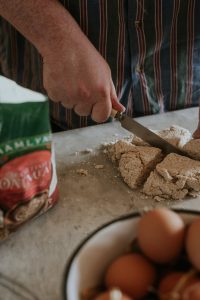
3. Make a well in the centre and add 1 cup of buttermilk/milk, mixing with a knife. Add in more buttermilk/milk until the mixture comes together into a pliable dough, similar to a scone dough. If the dough gets too sticky, you can add more flour in the next step.
4. Dust your counter with a mixture of flour and oatmeal and tip out your dough. If it’s too sticky, dust some more flour and oatmeal over the top.
5. Press the dough into an even layer and split into four. Take each portion and shape into a round with your hands. Roll with a floured rolling pin until about half an inch tall.
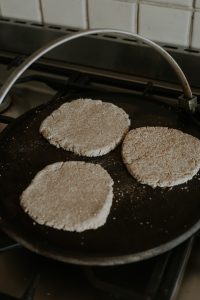
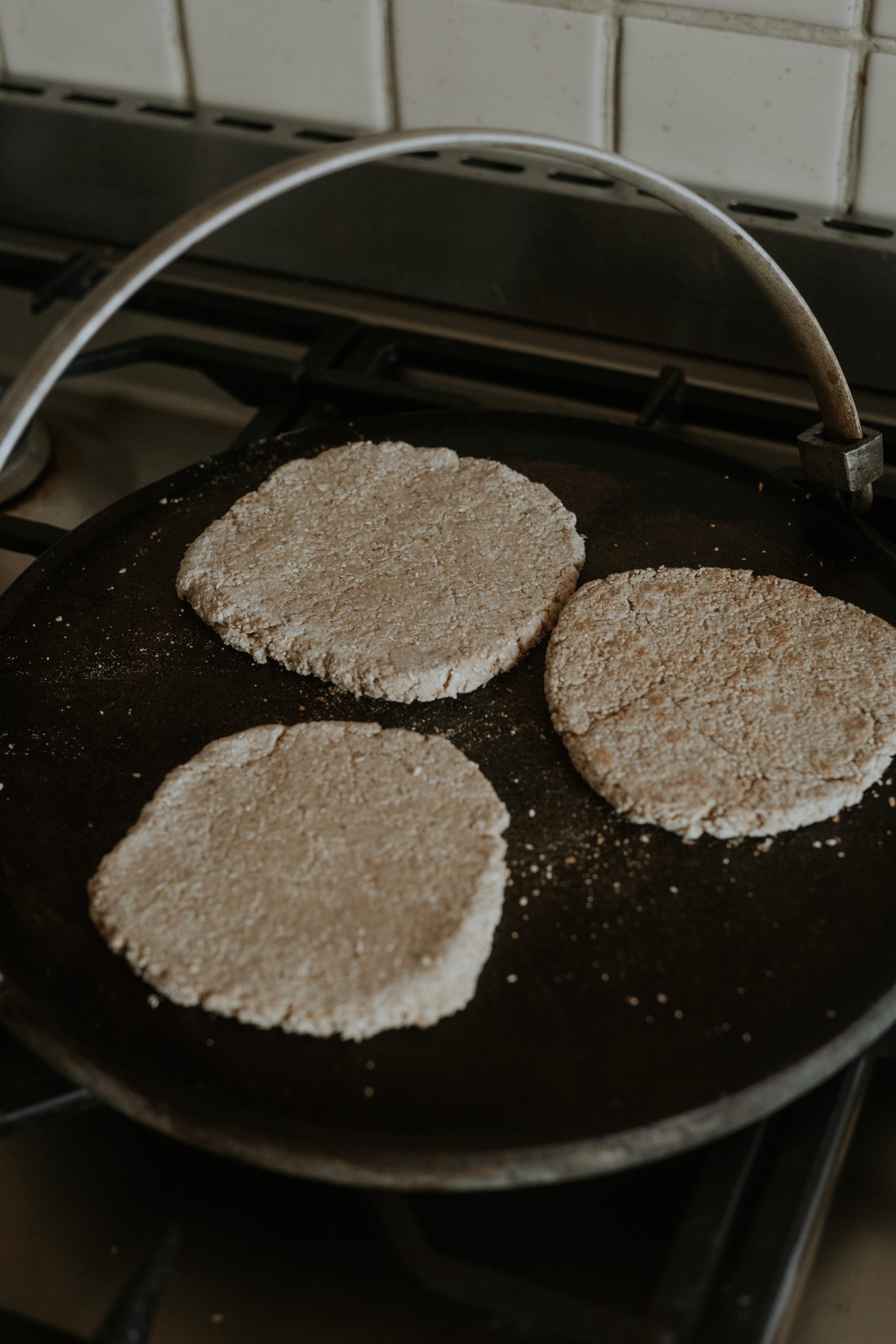
6. Add your bannock round onto the frying pan or griddle. Keep the temperature mid-low. Once the bannock smells like toasted oats, lift the side with a spatula. A bannock that is ready for turning will have a dark beige colour and will have crisped up on the underside.
7. Toss with the spatula and cook until toasted. Remove from your frying pan or griddle onto a plate.
8. Repeat the process for all bannocks.
Bannocks are endlessly versatile.
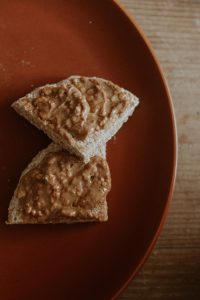
Enjoy them the day they are made with Scottish butter, cheese, smoked fish, honey, or jam, or your favourite toppings.
How will you eat yours?



How to Get Involved
Join in World Bannock Day by making your own bannocks and sharing your creations on social media using #WorldBannockDay.
Hamlyns of Scotland are proud to support this celebration. Our Scottish oatmeal, milled with generations of expertise, is the perfect base for a delicious bannock.
Find out more about Florence, bannocks, and World Bannock Day by visiting @TenementKitchen on Instagram.