


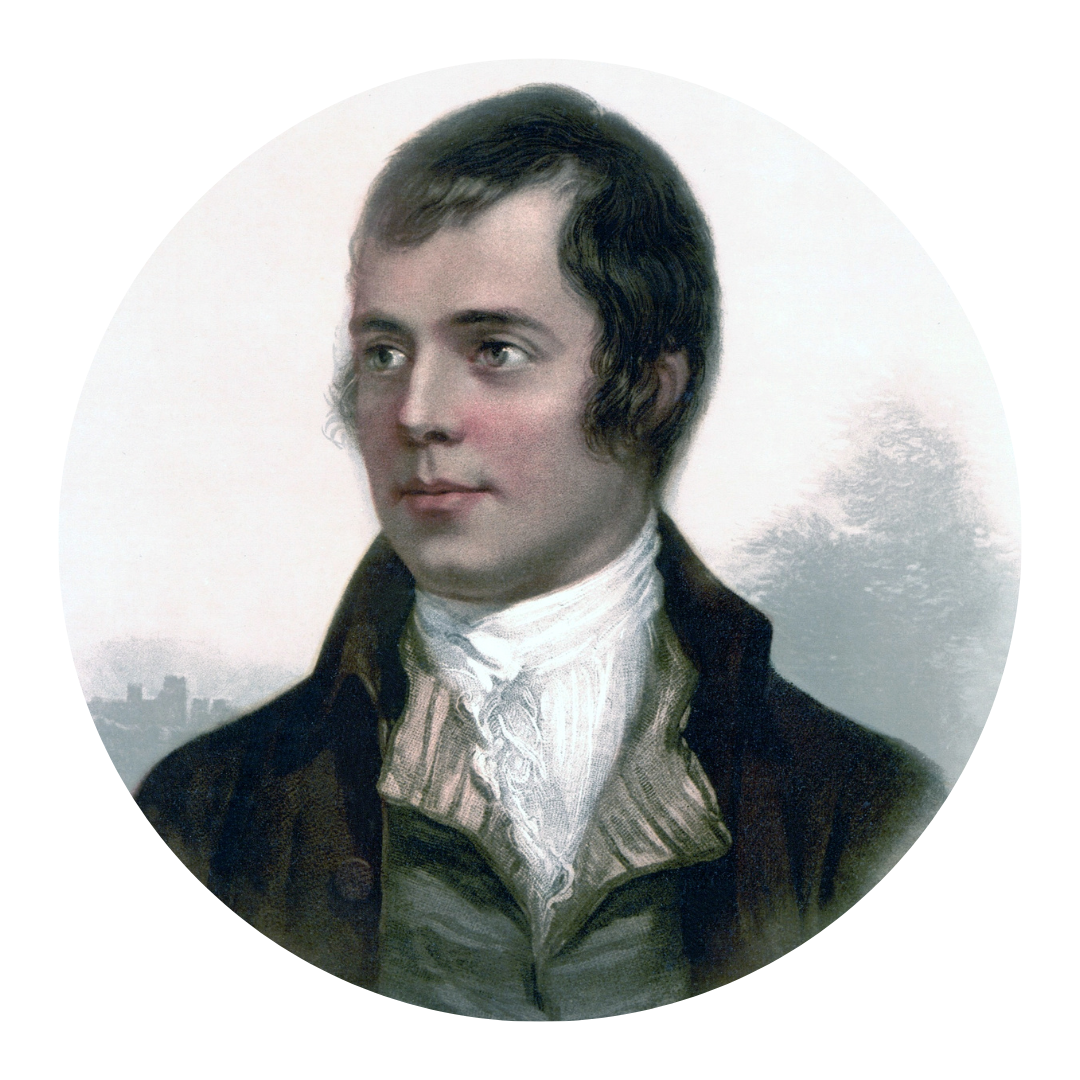
Whether you’re gathering with a handful of friends and family, or planning a larger celebration, a Burns Supper is a joyful blend of poetry, traditional hearty food, and fun.
The first Burns Supper was held on 21 July 1801, five years after Burns’ passing, when nine of his close friends gathered to share stories, recite his poetry and sing some of his songs.
Over two centuries later, this cherished tradition continues on his birthday for Scots across the world, and it’s surprisingly simple to recreate at home.
Setting the scene
Encourage your guests to wear a touch of tartan – whether it’s a scarf, tie, sash or a full kilt.
Dress your table with tartan runners or napkins, tall candlesticks, and a few nods to Scotland’s natural beauty such as sprigs of heather, thistles, or pine cones.
Play some traditional Scottish tunes in the background, and you’ll have your guests immersed in the spirit of the night before they’ve even had a nip of whisky!
A feast of tradition and taste
The evening follows a time-honoured structure, and food plays a starring role.
Start the evening with the Selkirk Grace, a short, simple prayer of thanks:
“Some hae meat and canna eat,
And some wad eat that want it;
But we hae meat, and we can eat,
And sae the Lord be thankit.”
Now it’s time for the meal to begin.
Start with haggis bonbons with a whisky mustard dip, or a warming bowl of Cock-a-leekie, Scotch broth or Cullen skink, a creamy soup made with smoked haddock, milk and cream, potatoes, and onions. This is our go-to Cullen Skink recipe from Cafe Gandolfi in Glasgow.
Serve with traditional oatcakes, or try this delicious easy oatmeal soda bread which you can make in less than half an hour from start to finish.
The haggis, the ‘great chieftain’ is, of course, the star of the show, and its arrival deserves a little theatre. Designate a guest to carry the haggis to the table while bagpipe music plays in the background, or they can follow a live piper if you’re lucky enough to know one! Guests clap its progress at it reaches the table.
As tradition dictates, the host or another guest will recite Burns’ famous Address to a Haggis with all the passion they can muster. When they reach the line “An’ cut you up wi’ ready slicht,” they plunge a knife into the haggis. It’s a moment that never fails to delight!
Serve the haggis with neeps and tatties (mashed turnip and potatoes) which can be served separately or combined together, and perhaps a whisky sauce.
You might also want to serve vegetarian haggis, which is readily available to buy or it’s easy to make your own.
If you’re feeling adventurous you could even try making your own traditional haggis which is steamed in a Pyrex bowl for a homemade twist.
End the meal with cranachan – a delicious blend of whipped cream, honey, fresh raspberries, toasted oats, and a splash of whisky. It’s the perfect nod to Scotland’s larder and makes a satisfying conclusion to any Burns Supper.
Alternatively serve a fruity clootie dumpling with custard. The name ‘clootie’ comes from the cloth that the dumpling is steamed inside. Use any kind of cloth – a large piece of white cotton, linen or muslin is ideal. Even an old pillow case will do the trick!
Serve your favourite Scotch whisky to raise a toast to the haggis, Burns, and to the Laddies and Lassies during the meal.
Let the entertainment begin
No Burns Supper is complete without a hearty dose of entertainment.
The Immortal Memory offers a reflection on Burns’ life and legacy. This speech, typically given by the host, can include some favourite anecdotes about Burns life and a favourite poem, followed by a toast to his immortal memory. This VisitScotland video has some tips for preparing the speech.
Then comes the light-hearted Toast to the Lassies, a humorous tribute to the women in the room, delivered by a male guest. The women then get their chance to respond with Reply to the Laddies, given by a female speaker, which pokes fun at the men present.
Round off the night by inviting your guests to recite their favourite Burns poems. He wrote more than 700 poems, many of which were set to music, so you won’t be stuck for choice! Some of the most famous ones include Tam o’Shanter, Red, Red Rose, To a Mouse, Auld Lang Syne, Ae Fond Kiss, and A Man’s a Man for A’ That.
Or visit BBC Scotland’s Burns’ Collection which includes audio, text and video archives of 716 of his works, which was produced for the 250th anniversary of Burns’ birth in 2009. It includes readings and songs by HRH King Charles, Alan Cumming, Elaine C Smith, Brian Cox, Liz Lochhead, Robbie Coltrane and Lorraine McIntosh.
Finally, before your guests leave, cross your arms and join hands for a rousing rendition of Auld Lang Syne, Burns’ most famous song, which never fails to bring a tear to the eye and a smile to the heart.
Auld Lang Syne
Should auld acquaintance be forgot,
And never brought to mind?
Should auld acquaintance be forgot,
And auld lang syne?
Chorus:
For auld lang syne, my dear,
For auld lang syne.
We’ll tak a cup o’ kindness yet,
For auld lang syne!
And surely ye’ll be your pint-stowp!
And surely I’ll be mine,
And we’ll tak a cup o’ kindness yet,
For auld lang syne!
Chorus
We twa hae run about the braes,
And pou’d the gowans fine;
But we’ve wander’d mony a weary fit,
Sin’ auld lang syne.
Chorus
We twa hae paidl’d in the burn,
Frae morning sun till dine;
But seas between us braid hae roar’d
Sin’ auld lang syne.
Chorus
And there’s a hand, my trusty fere!
And gie’s a hand o’ thine!
And we’ll tak a right gude-willie waught,
For auld lang syne.
Chorus